
 Facebook
 Instagram
 Telegram
 WhatsApp
 Viber
Viber +1 (416) 854-2420
Technical Translation Services
Accurate technical translation services for engineering, manufacturing, software, scientific, and industrial documents.
- Support for 200+ language pairs
- Provided by professional technical translators with industry-specific knowledge

Transparent Pricing and a Straightforward Start
Every technical translation project starts with a review of your documents and requirements. Because technical translation requires technical knowledge and strong linguistic expertise, I assess the content before providing a quote. This includes technical texts, patent translation, and other specialized documents. I also recommend the most suitable translation approach, including when machine translation may or may not be appropriate. You'll receive transparent pricing, turnaround time, and a clear translation process before work begins.
Why Choose My Professional Technical Translation Services
The process of translating technical materials while maintaining accuracy, technical communication, and industry-specific terminology is known as technical translation. Unlike other types of translation, translating technical documents requires scientific or technical knowledge, strong translation skills, and attention to detail. Together with my team, I provide technical translation and localization services for businesses in engineering, manufacturing, software, research, and other specialized industries. I translate user manuals, technical documentation, patents, and other technical content with careful attention to terminology, formatting, and consistency.
Technical Translators with Industry Expertise
A successful technical translation begins with assigning the right translator to the right subject matter. My team includes professional technical translators and technical writers with experience in engineering, manufacturing, software, scientific, and other specialized industries. By matching each project with a language expert who understands the technical terminology, we deliver accurate, consistent, and natural translations in the target language.
A Quality-Focused Technical Translation Process
Every technical translation follows a methodical process to ensure precision, reliability, and consistency. To ensure that the technical language used in each project is consistent, we employ translation memory, glossaries, terminology databases, and computer-assisted translation (CAT) tools. Every document is subjected to quality assurance inspections before release in order to confirm terminology, formatting, and general accuracy. Your technical documentation will be clear, accurate, and prepared for professional use thanks to this approach.
Technical Translation Solutions Tailored to Your Business
Every business has different technical translation needs, which is why we tailor our services to your specific project. I offer precise and adaptable translation solutions that suit your industry and goals, whether you need to translate technical documentation, user manuals, product specifications, technical reports, patents, software interfaces, safety documents, engineering materials, or multilingual product content. I provide translations that are dependable, consistent, and prepared for professional use in international markets by comprehending your target audience, technical jargon, and communication needs.
Additional Technical Translation Services
Technical Translation Review and Editing (Proofreading)
For projects that require an additional level of quality assurance, translated documents can be independently reviewed by another experienced technical linguist (or a team of them). This review focuses on terminology, technical accuracy, grammar, formatting, and consistency to ensure the finished translation meets professional standards before delivery.
In-Context Technical Content Verification
Some technical content needs to be reviewed within the environment where it will actually be used. We verify translated content in software applications, websites, online help systems, digital platforms, and technical manuals to confirm that terminology, formatting, and layout remain accurate after implementation.
Review may include:
- Detecting untranslated or inconsistent content
- Confirming correct use of technical terminology
- Verifying measurements, symbols, and numerical values
- Checking document formatting and layout
- Reviewing interface text for clarity and readability
- Ensuring consistency throughout multilingual technical content
Hence, this additional verification helps ensure that your translated materials are accurate, professional, and ready for publication or distribution.
SEO-Friendly Technical Translation
Technical content often serves more than one purpose. In addition to informing users, it may also help potential customers discover your products or services online. When translating technical websites, product pages, online knowledge bases, or documentation, we can adapt technical content for the target audience while maintaining the original meaning and incorporating relevant multilingual SEO keywords where appropriate. This approach helps improve online visibility without compromising technical accuracy or readability.
Ongoing Technical Documentation Translation
Technical documentation is rarely static. Supporting documentation must be updated as software is updated, products develop, and industry standards shift. We assist companies in keeping user manuals, product documentation, engineering specifications, safety information, and technical material up to date in all supported languages by offering continuous technical translation services. This ensures that customers, employees, and business partners always have access to the latest information in their preferred language.
With ongoing technical translation support, your customers, employees, business partners, and international stakeholders will always have access to accurate, up-to-date information in their preferred language, while maintaining consistency across all technical documentation and communications.
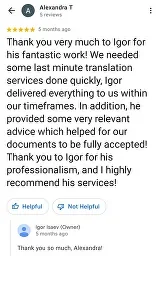
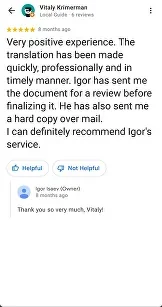
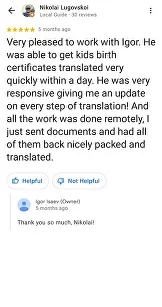
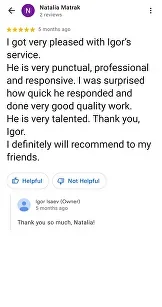
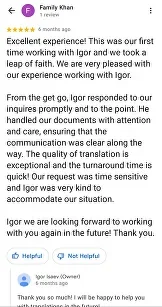
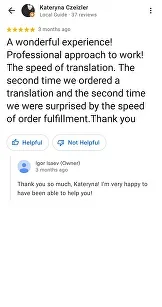
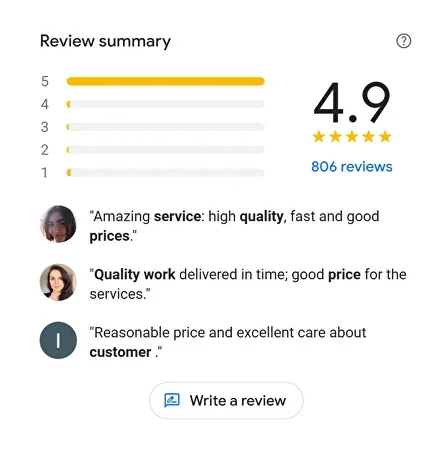
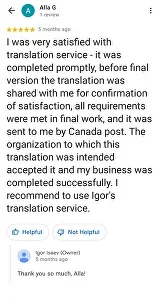
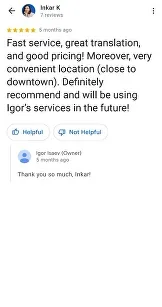
Customer Testimonials About My Technical Translation Services
How It Works
Briefing
I book a virtual meeting to review your project, target languages, content, and any requirements that you have. After the scope of the project is fully determined, I share a price quote and turnaround time for completion.
Preparation for localization
At the beginning of the project, my localization manager (or a team of them) and translators will familiarize themselves with your project. This process involves the following:
- If you need translations of your website, and if you prefer the translation to be done directly in your CMS, we request access to the website backend.
- We ask you to fill out a Style Guide to find out, for example, details such as whether there are any strings and words that should not be translated, and how the user should be addressed (formally or informally).
- We determine whether you have a glossary (list of terms with definitions), such as specific product names or abbreviations. If you don't have a glossary, we will help you draft a list of terms using special translation quality assurance tools and then decide which of the terms should be included.
- We prepare the strings and glossary. Then we will invite translators to the project. We will ask them to familiarize themselves with your materials and do research to understand your project and products in detail. We control project performance using a checklist.
- My project manager will decide whether a user manual, glossary and screenshots are needed on a project basis.
Localization
The translators will start working once the project is prepared. Translation is usually carried out on the online platform. We use several platforms, but the set of quality management tools is similar for each one of them:
- The glossary highlights terms if they occur in a string.
- Screenshots are displayed next to the relevant strings to be translated if translators are localizing design files. In this way, the translators can see the context.
- The translation memory tells the translators if they have previously translated the same text. This ensures a consistent translation.
- Automatic quality control (QA Check) warns of errors, such as a typo or a missing punctuation mark at the end of a sentence.
- Comments give project participants the opportunity to ask the client a question directly and specify, for example, the context or possible range of values for a certain variable.
Together, these five tools help to ensure an accurate translation.
Automatic checks
The translations are checked for any issues (typos, missing elements, etc.). The manager will review the results of the automatic quality checks and, if there are any errors, will ask the translators to check any problematic strings again.
Proofreading by an editor (Optional)
In addition to translation and self-checking, you can also order editing and/or proofreading to be performed by a second translator (or a team) who will act as an editor or a proofreader. They will familiarize themselves with the project and proofread each line while following the automatic checks described above.
Uploading translated texts and design work (Optional)
If your content comes from your website, depending on how you manage it, my team and I can work with local files created from your website or work directly within your CMS.
If you prefer us to work with local files, we can then take care of uploading all translated strings into your website.
We’re fluent in various design languages, technologies and platforms out there. We can translate a Wix, Tilda, or a WordPress site, or set up continuous website content translation for your Magento, Shopify, Salesforce and other eCommerce projects with ease.
If your content comes in design files (Adobe Photoshop, Adobe Illustrator, Canva, PDF, etc.), we can take care of replacing all the source content with translated strings, as well as adapting the layout as needed to accommodate the target languages (right-to-left adaptation vs. left-to-right, increased or decreased length of strings of text, formatting of paragraphs, and spacing, as examples).
Language quality assurance services (Optional)
After translation, verification and proofreading, we recommend checking the materials in the target languages.
Our translators and quality reviewers can test your website and perform all actions to launch each available window with localized content, and check every little detail of your design files. Thus, the translator will check all strings to ensure they match the source text's meaning and fit within the parameters of the fields and buttons. For websites, the translators usually need step-by-step instructions: for example, user histories or test cases. If there are no test cases, we can prepare these ourselves.
Translators enter each bug into a bug tracker or Google Sheets spreadsheet. Each entry indicates the problem string, describes the error itself, and proposes a corrected version.
Frequently Asked Questions
Who are your technical translators? What are your selection criteria?
My team consists of professional technical translators who are native speakers of the target language and have extensive experience translating technical documentation across a wide range of industries. To maintain high-quality standards, I work with translators who meet the following general requirements:
- A native speaker of the target language
- A minimum of two years' experience in technical translation or localization
- Extensive experience translating technical manuals, engineering documents, software documentation, patents, or other specialized technical materials
Each translator completes a technical translation evaluation utilizing real-world project-related materials prior to joining my team. The evaluation assesses the translator's proficiency in appropriately using technical vocabulary, maintaining consistency, adhering to formatting specifications, and clearly communicating complicated technical information.
Every assessment is carefully reviewed using established quality assurance criteria that measure accuracy, consistency, terminology, grammar, and overall translation quality. In addition, I monitor each translator's performance throughout our collaboration and regularly review client feedback to ensure that every project continues to meet my professional standards.
How do you maintain quality throughout technical translation projects?
Quality control begins before a translator is assigned to a client project. Every technical translator is evaluated based on their language proficiency, technical expertise, and ability to accurately translate specialized documents using appropriate terminology and formatting. New translators complete trial projects that are carefully reviewed to assess technical accuracy, consistency, grammar, and compliance with project requirements before they become part of my team.
Once a translator joins the team, I continue to monitor the quality of their work through regular project reviews and feedback from editors involved in proofreading and quality assurance. We also utilize professional translation tools, including translation memory, terminology databases, and quality assurance software, to help maintain consistency across every technical translation project.
Client feedback is another important part of our quality management process. After completing projects, I regularly review client comments and satisfaction ratings to identify opportunities for improvement, helping ensure that our technical translation services continue to meet the highest professional standards.
How can I help improve the accuracy of my technical translation?
Quality is built into every stage of our translation process. Technical translations are reviewed for terminology, grammar, formatting, numerical values, units of measurement, and consistency before delivery.
We also use translation memory, terminology databases, glossaries, and computer-assisted translation (CAT) tools to help ensure consistent technical language across all documents. For larger or highly specialized projects, an independent reviewer may perform an additional quality assurance check before the final files are delivered.
Which languages are you able to translate into?
My technical translation services support more than 200 language pairs, including widely spoken languages such as English (U.S. English, Canadian English, British English, and other variants), Canadian French, French (used in France), Spanish, German, Italian, Portuguese, Chinese, Japanese, Korean, Arabic, Ukrainian, Russian, and many others. Every project is assigned to a professional translator who is a native speaker of the target language and has experience translating technical documentation within the relevant industry, or a team of such translators.
If you require a language that is less commonly requested, I can usually source a qualified technical translator from my network of professional linguists. To determine the most suitable translator, pricing, and turnaround time for your project, simply send me your documents and language requirements for a personalized quote.
Send Your Request Today; Let's Book a Virtual Meeting
We'll get in touch with you today
* DISCLAIMER
I am a certified Canadian translator and a member in good standing of all provincial associations of professional translators in Canada. I am certified in the following language combinations: from Russian to English and from Ukrainian to English (by CTTIC, which includes ATIO, STIBC, ATIA, ATIS, ATIM, ATINS, CTINB; and by OTTIAQ), from English to Russian (by CTTIC, which includes ATIO, STIBC, ATIA, ATIS, ATIM, ATINS, CTINB; and by OTTIAQ), from English to Ukrainian, from Russian to French, from French to Russian, from French to Ukrainian, from Ukrainian to French, from English to French, from French to English (by OTTIAQ). I am also a certified translator and a member in good standing of the ATA in the U.S.A. in the language combination from English to Russian. Depending on the availability, urgency, requirements of the accepting organization, required certification, and other factors, certified translations in the above-mentioned language combinations can be provided by me personally or by the Translation Agency of Canada. Certified translations in other language combinations are provided by the Translation Agency of Canada. Please check and make sure you accept the full privacy policy, terms of service, and refund policy before using my website, before contacting me or submitting a request on the website.
© ISAEV — Certified Translations for Canada. All rights reserved.
 E-mail
 Phone
Phone WhatsApp
 Viber
Viber Telegram
 Facebook